

ID Telecom & Data, Inc. is a trusted Coral Springs business phone systems and structured cabling provider. As a family-owned cabling contractor, we specialize in VoIP services, voice and data cabling, network infrastructure, and complete telecommunications solutions from leading brands like Avaya, Samsung, Nortel, and NEC. Our certified cabling technicians handle everything from new system installations to maintenance, surge protection, and equipment upgrades. Whether you need fiber optic cabling, Cat 5/6 installation, low voltage cabling, office cabling solutions, phone system repairs, or a custom business communications setup, our AAA-rated BBB service delivers reliable solutions. Contact ID Telecom & Data, Inc. at 954-340-6880 for a free consultation and experience our professional telecommunications and network cabling expertise.
Common Network Cabling Issues in South Florida Office Buildings
Most IT managers think cabling is just about plugging things in. Run the wire, crimp the ends, move on. But the infrastructure underneath your network sees more than that — and if you don't, you're asking for downtime. Cables may not show up on your dashboard, but they do leave a footprint on your uptime. Especially if you're dealing with humidity or running outdated standards.
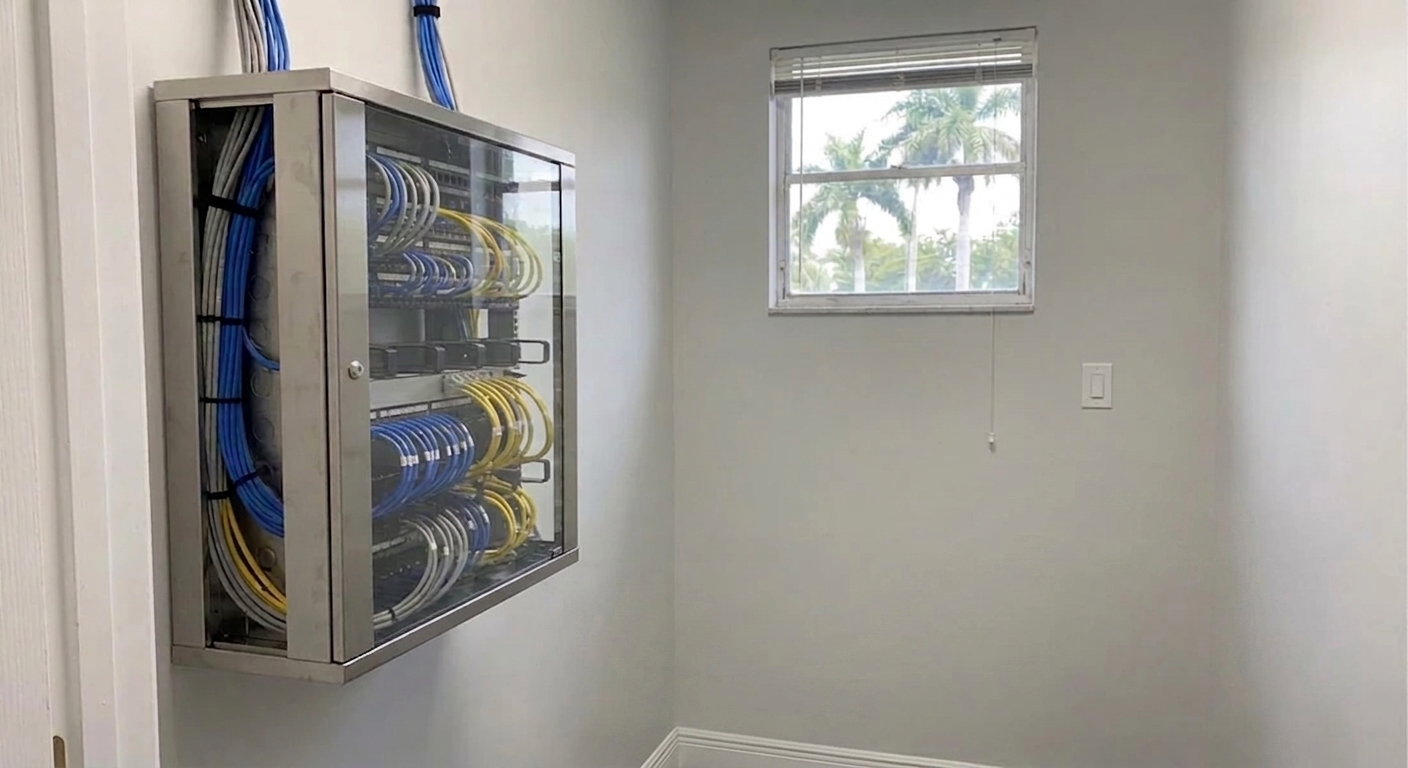
So here's the deal. If you're building a network to support something real, that's great. Just don't treat those cables like they're invincible. Every run should have a purpose. Every termination needs precision. And every infrastructure decision should be grounded in how the environment behaves — not just how it looked in the blueprint.
Humidity Doesn't Just Fog Windows
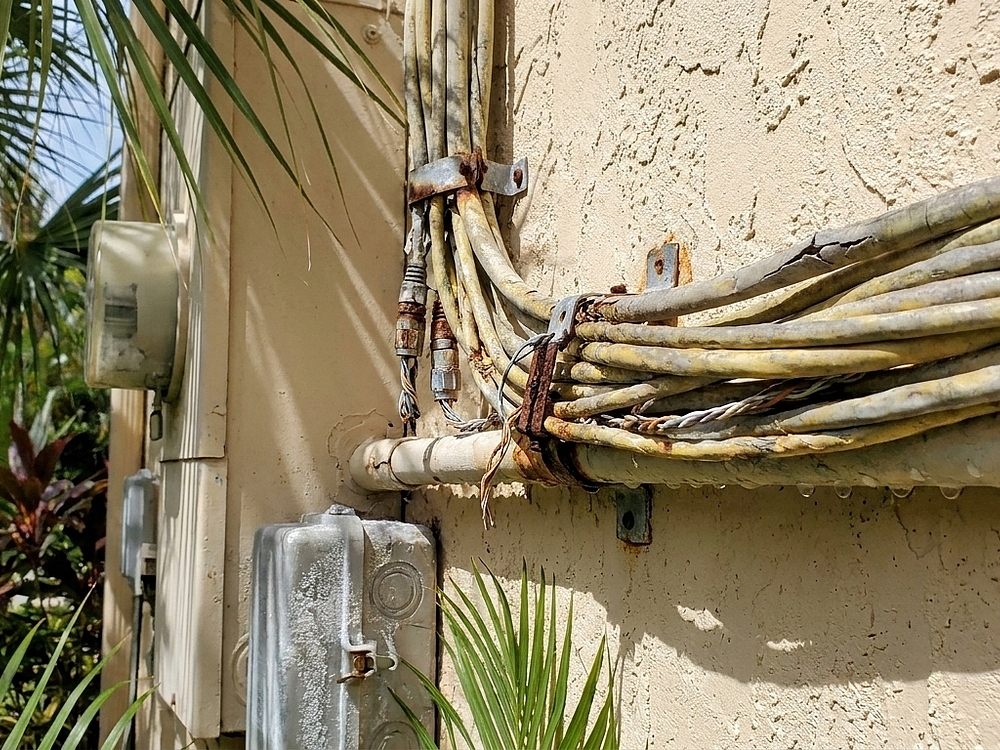
South Florida's climate isn't doing your cabling any favors. Moisture creeps into conduits, junction boxes, and ceiling spaces faster than most people realize. Once it's in, corrosion starts. Copper oxidizes. Connections degrade. Signal quality drops off a cliff.
We've seen entire floors go dark because water found its way into a poorly sealed patch panel. It doesn't take a hurricane — just consistent exposure and a lack of weatherproofing. If your building wasn't designed with moisture barriers or your cabling wasn't spec'd for high-humidity environments, you're already behind.
Tangled Runs Cost More Than Time
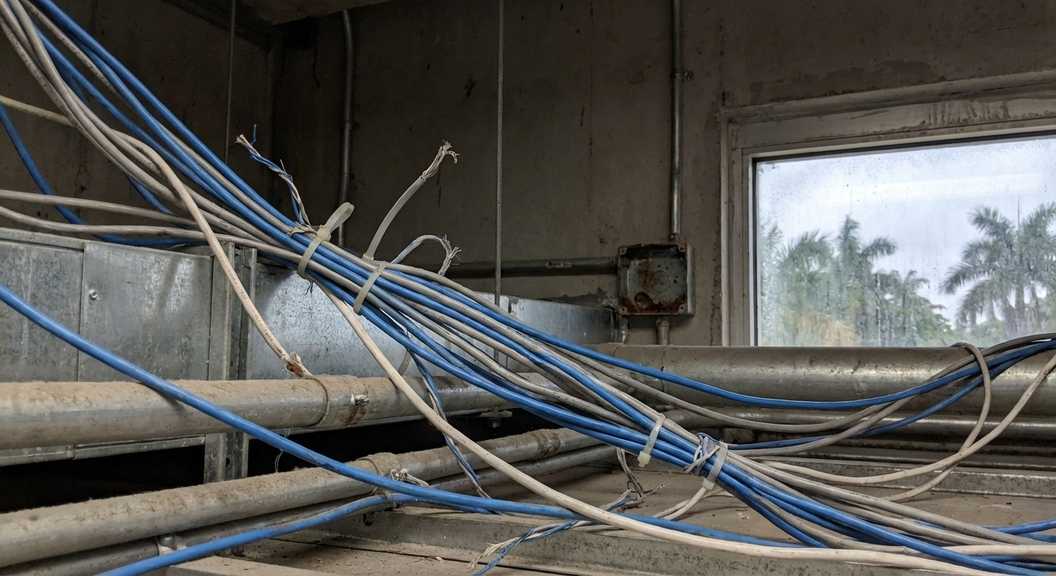
Walk into most ceiling spaces and you'll find a mess. Cables looped over HVAC ducts, zip-tied to sprinkler pipes, draped across lighting fixtures. No labels. No logic. Just chaos waiting to bite someone during a move or an upgrade.
Poor cable management isn't just ugly — it's expensive. When you can't trace a line, troubleshooting takes hours instead of minutes. When cables are kinked or crushed under their own weight, performance suffers. And when you need to add capacity? Good luck finding room in that rat's nest.
Interference Hides in Plain Sight
South Florida office buildings are packed with electrical noise. HVAC systems cycling on and off. Fluorescent ballasts humming. Power surges from afternoon storms rolling through. All of it creates electromagnetic interference that unshielded cables can't ignore.
If your network drops every time the AC kicks in or slows to a crawl during peak hours, you're probably dealing with EMI. Shielded twisted pair or fiber optic cabling solves most of it — but only if it's installed correctly and kept away from power lines. Cutting corners here means cutting performance. Proper surge and lightning protection can also help safeguard your infrastructure from storm-related electrical issues.
Old Standards Don't Cut It Anymore
Plenty of South Florida buildings are still running on Cat5 or worse. Maybe it worked fine ten years ago when bandwidth demands were lighter and device counts were lower. But today? It's a bottleneck.
Outdated cabling can't handle modern data loads. Video conferencing stutters. Cloud applications lag. File transfers crawl. And if someone tried to save money by using knockoff cables or substandard materials, you're looking at failures that shouldn't happen in the first place. Upgrading to Cat6a or fiber isn't optional anymore — it's baseline.
Pests and Construction Don't Ask Permission
Rodents love South Florida as much as tourists do. They also love chewing through network cables tucked into walls and ceilings. One gnawed line can take down an entire department — and you won't know until someone reports the outage.
Construction and renovation work can be just as destructive. Contractors drilling into walls, moving ceiling tiles, or pulling new electrical lines don't always check what's already there. Cables get cut, pinched, or yanked loose. If you're not protecting your runs with conduit or marking them clearly, you're gambling with uptime.
When Pathways Fill Up
Office buildings built twenty or thirty years ago weren't designed for today's device density. Back then, a few desktop computers and a fax machine were enough. Now you've got workstations, phones, access points, cameras, IoT sensors — all fighting for space in the same cable trays.
Overloaded pathways create heat. Heat degrades performance. And when there's no room left to add new lines, your options shrink fast. Planning for growth means sizing pathways correctly from the start and leaving room for what's coming next — not just what you need today.
Sloppy Terminations Kill Performance
A cable is only as good as its weakest connection. Rushed installations, poorly crimped ends, mismatched connectors — all of it adds up to signal loss and unreliable performance. In South Florida's competitive office market, speed matters. But speed without quality leaves you fixing problems instead of preventing them.
We've pulled apart patch panels where half the terminations were loose or improperly seated. No surprise the network was flaky. If the person doing the install didn't have the training or the tools, the results show. Every termination should be tested. Every connection should be verified. Anything less is asking for trouble.
What Your Documentation Should Include
Want to troubleshoot fast? Know what you're working with. You'll need more than a vague memory of where cables were run.
- Cable maps showing every run, endpoint, and patch panel
- Test results from installation proving performance standards were met
- Labels on every cable, port, and termination point
- Records of any changes, upgrades, or repairs made over time
- Environmental notes about moisture-prone areas or high-interference zones
If you can't produce this when something breaks, you're wasting time and money hunting for answers that should already be documented.
Where Most IT Teams Slip Up
- Assuming existing cabling is fine without testing it first
- Skipping proper shielding in high-interference environments
- Ignoring moisture risks in coastal or ground-floor spaces
- Letting contractors handle cabling without oversight or verification
- Failing to plan for future capacity when designing pathways
When to Bring In a Pro
If your office is dealing with frequent outages, slow performance, or you're planning a buildout or renovation, DIY gets risky fast.
A cabling and data wiring professional helps you:
- Assess existing infrastructure and identify weak points
- Design pathways that account for growth and environmental factors
- Install shielded or fiber cabling where interference is a concern
- Terminate and test every connection to industry standards
- Document everything so future changes don't turn into guesswork
It's not just about fixing what's broken today. It's about building infrastructure that supports your business for years without constant firefighting. Whether you're in Fort Lauderdale, Miami, or Broward County, working with experienced telecom service providers ensures your network infrastructure meets both current demands and future growth requirements.
Infrastructure That Holds Up
Running cable isn't the hard part. Running it right — and defending that work when the network goes down — that's where offices get caught off guard. There's no excuse for sloppy installs when the standards are clear. But there's also no forgiveness when you ignore the environment or cut corners on materials. South Florida's climate and building stock demand more attention, not less. Get it right the first time or plan on doing it twice.
Ready to Strengthen Your Network?
We know how critical reliable cabling is for keeping your business moving in South Florida. If you're tired of downtime or want to make sure your next upgrade is done right, let's talk about how we can help. Give us a call at 954-340-6880 or get a free consultation and let’s build a network that works as hard as you do.
‹ Back
Recent Posts
-

Signs Your Network Cabling in Pembroke Pines Needs an Upgrade
September 11, 2026
-
Is It Time to Upgrade Your Data Cabling in Pembroke Pines?
August 28, 2026
-
-
-