

ID Telecom & Data, Inc. is a trusted Coral Springs business phone systems and structured cabling provider. As a family-owned cabling contractor, we specialize in VoIP services, voice and data cabling, network infrastructure, and complete telecommunications solutions from leading brands like Avaya, Samsung, Nortel, and NEC. Our certified cabling technicians handle everything from new system installations to maintenance, surge protection, and equipment upgrades. Whether you need fiber optic cabling, Cat 5/6 installation, low voltage cabling, office cabling solutions, phone system repairs, or a custom business communications setup, our AAA-rated BBB service delivers reliable solutions. Contact ID Telecom & Data, Inc. at 954-340-6880 for a free consultation and experience our professional telecommunications and network cabling expertise.
Does Structured Cabling in South Florida Help Growing Offices?
Most office managers think infrastructure upgrades are just about plugging things in. Add a router here, string a cable there. But if you're scaling up and your network can't keep pace, you're already behind. Growing offices don't just need more bandwidth — they need systems that won't buckle when you add ten employees, launch a new department, or shift to cloud-heavy workflows.
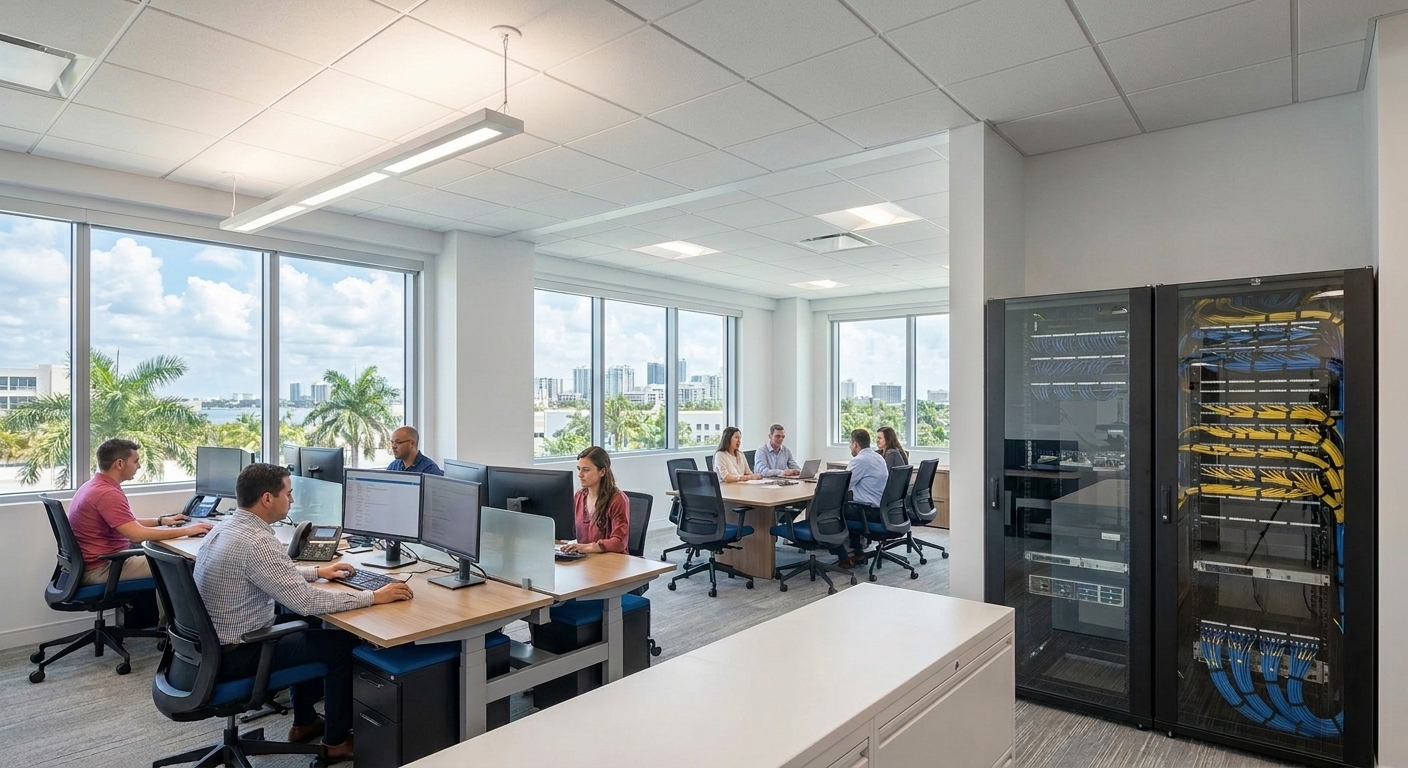
So here's the reality. Structured cabling isn't sexy, but it's the backbone of everything your business does online. It's what keeps your phones ringing, your files accessible, and your team productive. Skip it or cheap out on installation, and you'll pay later — in downtime, in service calls, and in opportunities lost because your network couldn't handle the load.
When Your Current Setup Becomes the Bottleneck
You can patch things together for a while. Add a switch here, run another line there, hope it holds. But patchwork infrastructure fails the moment you push it. We've seen offices hit walls because nobody planned for what came next — and by the time they realized the problem, their network looked like a tangled mess behind every desk.
Structured cabling flips that script. Instead of wiring each device individually, you install a unified system designed to handle voice, data, security, and AV through standardized pathways. That means fewer points of failure, cleaner cable management, and the ability to add capacity without ripping out walls or shutting down operations for days.
South Florida Offices Face Their Own Set of Obstacles
Humidity doesn't just fog up windows — it corrodes connections. Storms knock out power. Salt air from the coast creeps into poorly sealed spaces and degrades equipment over time. If your cabling wasn't installed with local conditions in mind, you're risking performance drops and premature hardware failure.
Cabling for voice and data accounts for that. Installers who know the region use materials rated for moisture and temperature swings. They route cables through protected pathways and seal entry points to keep the elements out. It's not overkill — it's how you avoid emergency repairs during hurricane season when every tech in town is already booked.
What Structured Cabling Actually Covers
This isn't just about running Ethernet to desks. A proper structured cabling system integrates everything your office depends on — and it does it in a way that scales without chaos.
- Data networks: Wired connections for computers, printers, and servers that need speed and stability beyond what WiFi can deliver
- Phone systems: VoIP lines and traditional telephony routed through the same infrastructure, cutting redundancy
- Security: IP cameras, access control systems, and alarms all tied into a centralized backbone
- AV equipment: Conference room displays, projectors, and video conferencing gear wired for reliability during client presentations
- Wireless access points: Strategically placed and hardwired for consistent coverage across every corner of the office
Scaling Without Tearing Everything Apart
Adding headcount shouldn't require calling a tech every time someone joins the team. With structured cabling, expansion is plug-and-play. You've already got the pathways, the patch panels, and the capacity built in. Need five new workstations? Patch them in. Opening a new floor? Extend the backbone. No rewiring, no surprises.
Contrast that with ad-hoc setups where every addition means snaking new cables through ceilings, drilling new holes, and hoping nothing breaks in the process. We've watched businesses lose entire workdays because their network couldn't accommodate growth — and by the time they fixed it, they'd spent more than a structured voice and data cabling system would've cost from the start.
Downtime Costs More Than Installation
A single network outage during peak hours can cost thousands in lost productivity. Multiply that across a year of preventable failures, and you're looking at real money. Structured cabling reduces that risk by organizing connections into manageable segments. If something does go wrong, you can isolate the issue without taking down the entire office.
Documentation matters too. Professional installations include labeling and diagrams that show exactly where every cable runs and what it connects to. That means faster troubleshooting, cleaner upgrades, and fewer billable hours when you need service. Compare that to mystery cables nobody remembers installing — good luck fixing that quickly.
Supporting Remote and Hybrid Teams
Remote work didn't kill the office — it just raised the bar for what connectivity needs to deliver. Video calls, cloud applications, and file sharing all demand consistent, high-speed access. If your infrastructure can't support that without lag or dropped connections, your team will notice — and so will your clients.
Structured cabling gives you the bandwidth and reliability to handle hybrid workflows. Employees in the office get wired connections that don't compete with WiFi traffic. Remote workers benefit from secure VPN access backed by stable network architecture. And when everyone's on a video call at once, the system doesn't choke.
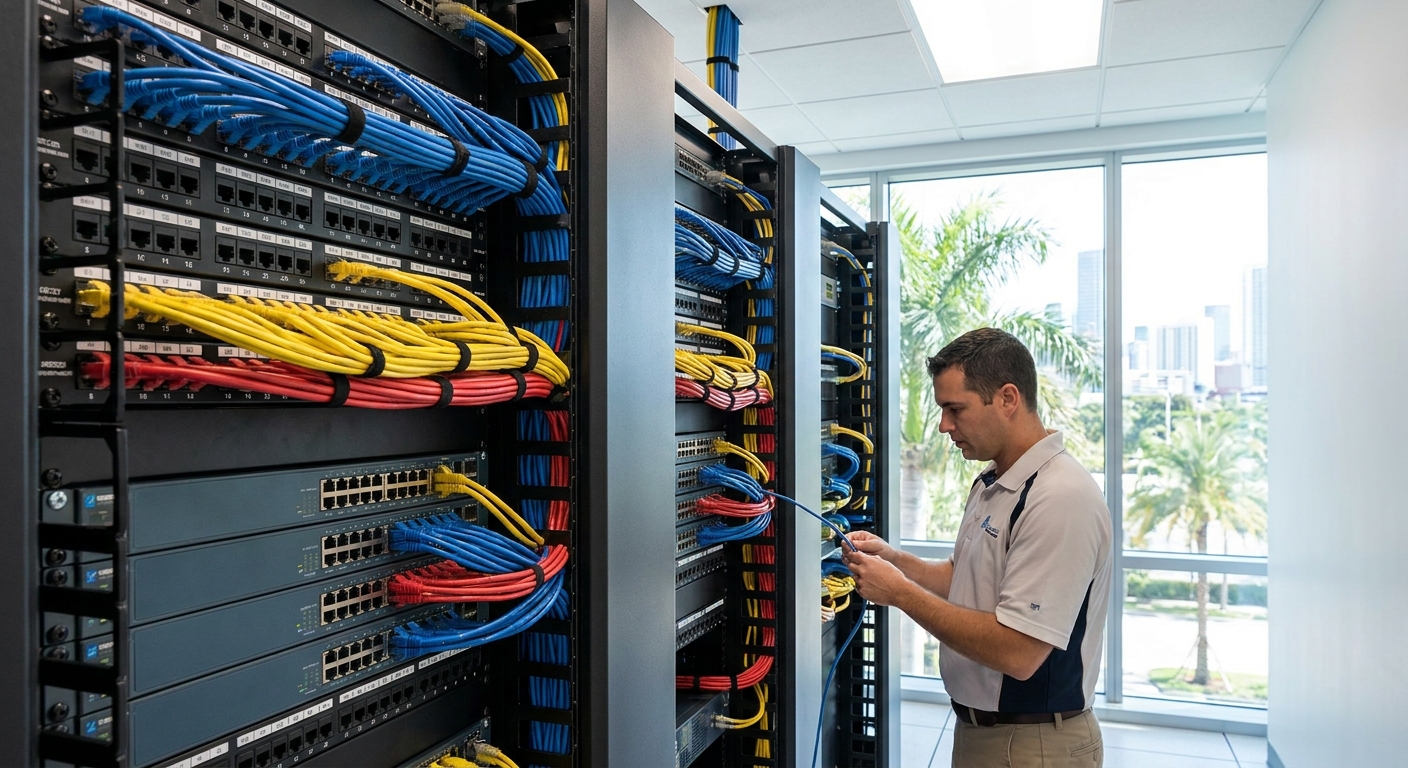
Compliance and Security Are Built In
Regulated industries don't have the luxury of sloppy network design. Healthcare, finance, and legal firms all face strict requirements around data security and privacy. Structured cabling makes it easier to enforce those standards by giving you control over how data flows through your office.
You can segment networks to keep sensitive information isolated. You can monitor access points and track who's connected where. And you can implement redundancies that keep critical systems online even if part of the network fails. Try doing that with a tangle of unmarked cables and consumer-grade switches.
Choosing an Installer Who Gets It Right
Not every cabling company knows how to handle South Florida conditions — or the specific needs of a growing office. You need a team that's worked in high-rise retrofits, dealt with coastal corrosion, and understands how to future-proof a system without overbilling you for features you don't need.
Look for these markers when you're vetting installers:
- Experience with commercial installations, not just residential or basic setups
- Certifications from manufacturers and industry bodies that prove they know current standards
- References from businesses in your area, ideally in similar industries or building types
- Clear documentation practices that include labeling, diagrams, and post-installation walkthroughs
- Ongoing support options so you're not left guessing when you need to expand or troubleshoot
When DIY or Budget Solutions Backfire
We get it — hiring professionals costs more upfront than buying cables online and running them yourself. But shortcuts have a way of compounding. Poorly terminated connections cause packet loss. Unshielded cables pick up interference. Overcrowded pathways overheat and fail. By the time you realize the problem, you've spent more on fixes than a proper install would've cost.
Budget solutions also ignore growth. You might save money today by installing just enough capacity for current needs — but six months later when you're hiring, you're back to square one, paying for another round of installation. Data cabling in Broward County is an investment that pays off every time you scale without friction.
Why Waiting Makes It Harder
The longer you put off upgrading your infrastructure, the more complicated the fix becomes. Cables get buried under new construction. Equipment becomes incompatible. Workarounds pile up until nobody knows what's holding the system together. Eventually, you'll be forced to overhaul everything at once — during business hours, with everyone watching productivity tank.
Better to plan it now while you have control over the timeline. You can schedule installation during off-hours, migrate systems in phases, and build the network you'll need for the next five years — not just the next five months. That's how growing offices stay ahead instead of constantly catching up.
Getting It Done Without the Guesswork
Structured cabling in South Florida isn't just a nice-to-have for growing offices — it's what separates businesses that scale smoothly from those that stumble every time they add capacity. You don't need to be a network engineer to know whether your infrastructure can keep up. You just need to ask whether your current setup was designed for where you're headed, or where you've been.
If the answer isn't obvious, it's time to bring in professionals who can assess what you have, map out what you need, and install a business phone system in South Florida that works the first time. No patchwork, no compromises, and no downtime you didn't plan for. That's what structured cabling delivers — and that's what growing offices in South Florida need to stay competitive.
Let’s Build Your Office for What’s Next
We know how critical it is for your business to have a network that grows with you, not against you. If you’re ready to leave patchwork fixes behind and invest in a cabling system that supports your team’s ambitions, let’s talk. Call us at 954-340-6880 or get a free consultation—together, we’ll make sure your office is ready for whatever comes next.
‹ Back
Recent Posts
-
Can Better Voice Cabling in Miramar Improve Call Quality?
October 9, 2026
-
Is Fiber Optic Cabling in Pembroke Pines a Smart Move for Your Office?
September 25, 2026
-

Signs Your Network Cabling in Pembroke Pines Needs an Upgrade
September 11, 2026
-
Is It Time to Upgrade Your Data Cabling in Pembroke Pines?
August 28, 2026
-