

ID Telecom & Data, Inc. is a trusted Coral Springs business phone systems and structured cabling provider. As a family-owned cabling contractor, we specialize in VoIP services, voice and data cabling, network infrastructure, and complete telecommunications solutions from leading brands like Avaya, Samsung, Nortel, and NEC. Our certified cabling technicians handle everything from new system installations to maintenance, surge protection, and equipment upgrades. Whether you need fiber optic cabling, Cat 5/6 installation, low voltage cabling, office cabling solutions, phone system repairs, or a custom business communications setup, our AAA-rated BBB service delivers reliable solutions. Contact ID Telecom & Data, Inc. at 954-340-6880 for a free consultation and experience our professional telecommunications and network cabling expertise.
Is Fiber Optic Cabling Worth It for South Florida Offices?
Most office managers think internet is just about speed. Fast or slow. But your network infrastructure says more than that — and if you're not paying attention, you're setting yourself up for problems. Cabling may not show up on your P&L, but it does leave a mark on productivity. Especially if you're running cloud apps or hosting video calls all day.
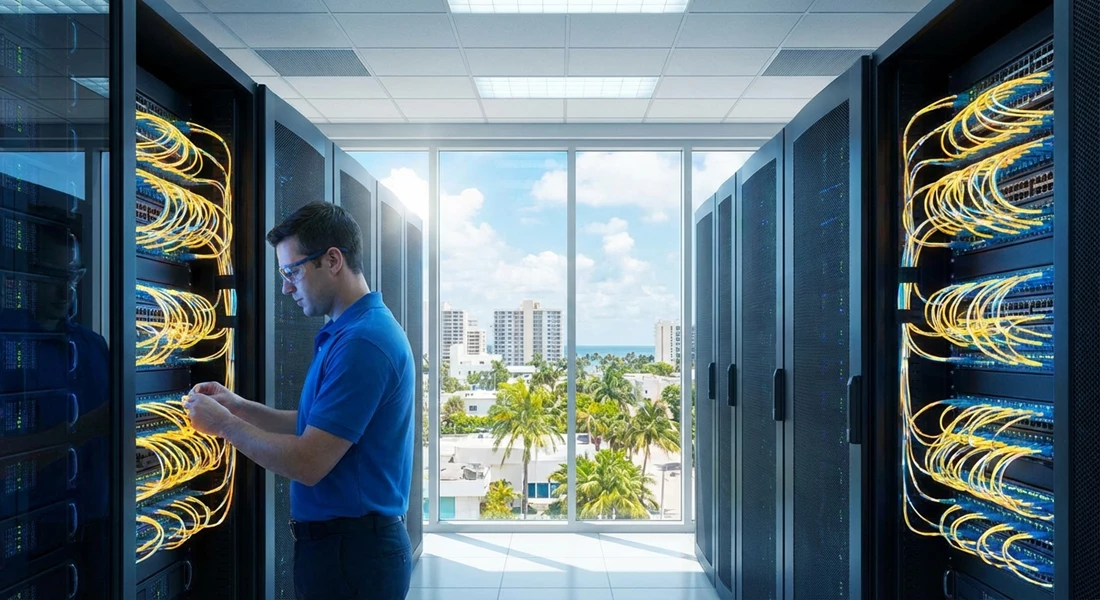
So here's the reality. If you're building something that lasts, fiber makes sense. Just don't treat it like a plug-and-play miracle. Every connection should support real work. Every upgrade needs a reason. And every infrastructure decision should be grounded in how your team actually operates — not just what the sales pitch promised.
Speed That Actually Matches What You Need
Copper lines were fine when email was the heaviest lift. Now? Not even close. Fiber optic cabling moves data as light through glass strands, which means bandwidth that doesn't choke when your entire team hops on a Zoom call. We're talking gigabit speeds that hold up under pressure.
South Florida offices deal with high-density usage. Marketing teams uploading video. Accounting pulling reports from the cloud. Sales reps streaming demos. Fiber handles that load without the lag that kills momentum. And when you're competing for clients in Miami or Fort Lauderdale, a frozen screen during a pitch isn't just annoying — it's expensive.
Weather Doesn't Knock It Out
Thunderstorms roll through South Florida like clockwork. Hurricanes aren't hypothetical — they're part of the annual budget conversation. Copper cables pick up interference from electrical storms and can corrode in humid conditions. Fiber doesn't care about either.
Because fiber transmits light instead of electricity, electromagnetic interference isn't a factor. That means fewer outages when the weather turns. And in a region where summer storms can hit daily, that reliability adds up fast. Downtime costs money. Fiber cuts that risk.
Your Network Won't Need a Redo in Three Years
Technology moves fast. What works today might bottleneck tomorrow. Fiber optic infrastructure is built to scale with demand, which means you're not ripping out cables every time bandwidth requirements jump. It supports the next wave of tools without a full reinstall.
We're seeing more IoT devices in offices. Smart HVAC systems. Security cameras streaming to the cloud. Conference room tech that pulls serious data. Fiber handles that expansion without breaking a sweat. Copper? You'll be back at square one before long.
Security That's Harder to Crack
Data breaches aren't just a tech company problem. Any business handling client information, financial records, or proprietary strategies is a target. Copper cables emit signals that can be intercepted with the right equipment. Fiber doesn't broadcast anything — it's a closed loop of light.
That makes tapping into a fiber line exponentially harder. For offices dealing with sensitive data — legal firms, medical practices, financial advisors — that extra layer of protection isn't optional. It's the baseline. And in South Florida's competitive business landscape, a breach can sink your reputation overnight.
The Upfront Cost Isn't Small
Fiber installation costs more than running standard ethernet. That's just the math. You're paying for specialized materials, trained technicians, and sometimes building modifications to accommodate the new infrastructure. If your office isn't already fiber-ready, expect a real invoice.
But here's the flip side. Maintenance costs drop. Downtime shrinks. Productivity climbs. When you factor in what slow or unreliable internet actually costs — missed deadlines, frustrated clients, lost deals — the ROI starts to make sense. It's not about the sticker price. It's about what you're buying.
Not Every Building Has Access Yet
Urban cores like Miami, Boca Raton, and West Palm Beach have solid fiber coverage. Suburban pockets? It's hit or miss. Some areas are still waiting for providers to expand their networks, which means fiber might not even be an option depending on where your office sits.
Before you commit to anything, check availability with local carriers. Ask about installation timelines. Confirm what speeds they can actually deliver, not just what's listed on the website. If fiber isn't available yet, keep tabs on expansion plans. The map is filling in fast.
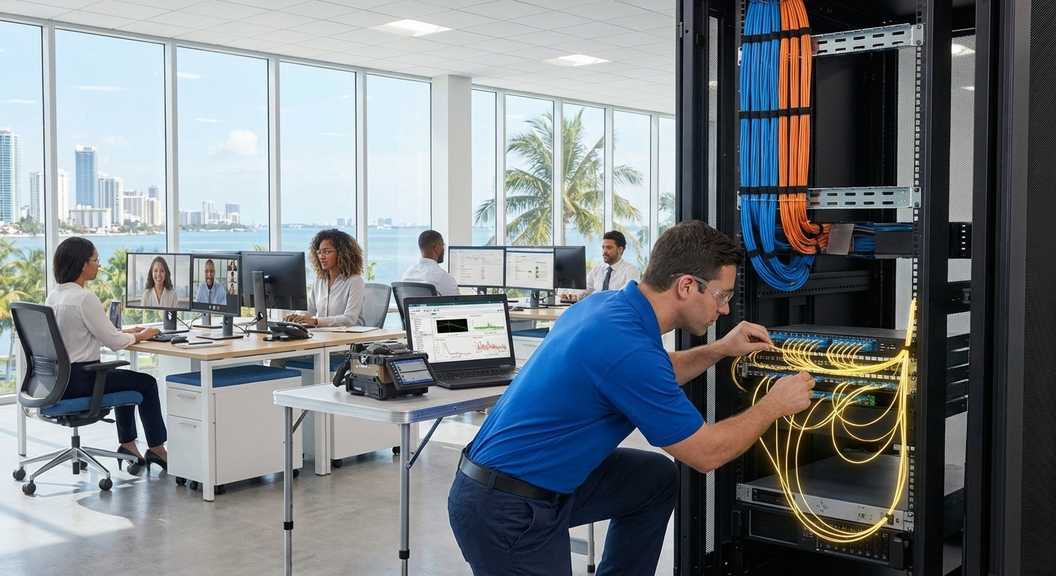
Installation Means Temporary Disruption
Running new cabling through an active office isn't invisible. There will be noise. There will be workers. There might be a few hours where certain areas lose connectivity while the switchover happens. That's the trade-off for a long-term upgrade.
Smart offices schedule installations during off-hours or over weekends to minimize impact. If that's not possible, plan around it. Notify your team. Adjust deadlines. Make sure critical work isn't dependent on network access during the transition window. A little planning goes a long way.
What to Confirm Before You Commit
Fiber isn't a one-size-fits-all solution. Some offices need it. Others can get by with less. Before you sign anything, make sure you've covered the basics. Here's what matters most:
- Current and projected bandwidth needs based on team size and usage patterns
- Availability of fiber service at your specific address
- Installation costs, including any building modifications required
- Service level agreements and uptime guarantees from your provider
- Compatibility with existing network equipment and hardware
When Fiber Makes the Most Sense
Not every office needs to jump on fiber immediately. But certain situations make it a no-brainer. If your team is growing, if you're moving to a new space, or if your current internet can't keep up, fiber should be on the table.
Here's where we see the biggest wins:
- Offices with remote teams relying on constant video conferencing and cloud collaboration
- Creative agencies uploading and downloading large media files daily
- Financial or legal firms handling sensitive client data that demands top-tier security
- Tech companies running development environments or hosting applications
- Medical offices transmitting patient records and imaging files securely
What Happens If You Wait
Delaying a fiber upgrade doesn't just mean slower internet. It means compounding inefficiencies. Every time a file takes too long to upload, that's lost time. Every dropped video call is a missed opportunity. Every frustrated employee is a productivity drain.
And as more businesses in South Florida adopt fiber, the competitive gap widens. Clients expect fast responses. Partners expect seamless collaboration. If your infrastructure can't deliver, someone else's will. Waiting might save money today, but it costs momentum tomorrow.
How to Choose the Right Provider
Not all fiber services are created equal. Speeds vary. Support quality differs. Contracts come with fine print that matters. Do your homework before you commit to a multi-year agreement.
Here's what to evaluate:
- Actual upload and download speeds, not just advertised maximums
- Service reliability and average uptime percentages
- Customer support availability and response times
- Contract terms, including early termination fees and price lock guarantees
- Installation timeline and any potential delays
The Documentation You'll Need
Once fiber is installed, keep records. You'll want proof of what was installed, when, and by whom. If issues arise down the line, that documentation becomes your leverage with the provider.
Make sure you have:
- Signed service agreements with all terms clearly outlined
- Installation receipts and completion certificates
- Network diagrams showing cable routes and connection points
- Warranty information for all equipment and materials
- Contact details for technical support and emergency service
Common Mistakes Offices Make
We've seen plenty of businesses rush into fiber without thinking it through. They assume faster internet solves everything. It doesn't. If your internal network is a mess, fiber won't fix that. If your routers are outdated, you won't see the full benefit.
Here's where most offices trip up:
- Upgrading to fiber without assessing internal network hardware compatibility
- Choosing the cheapest provider without checking service quality or support
- Ignoring installation timelines and disrupting critical business operations
- Failing to train staff on new systems or troubleshooting basics
- Skipping regular maintenance checks after installation is complete
Infrastructure That Keeps Pace
Investing in fiber optic cabling isn't about chasing the latest trend. It's about building a foundation that supports real work, real growth, and real competition. South Florida offices that make the jump see the difference in speed, reliability, and security. Those that don't? They're playing catch-up while their competitors move ahead.
We help businesses make infrastructure decisions that stick — with clarity, speed, and an understanding of what it means for operations, not just the tech specs. If your office is ready to upgrade, make sure you're doing it right. For expert guidance on cabling voice data wiring and comprehensive telecom services, reach out to our team at ID Telecom.
Let's Build a Network That Works for You
Upgrading your office's cabling is more than a technical decision—it's about setting your team up for success every day. We know what it takes to keep South Florida businesses connected and competitive, and we're here to help you make the right call for your unique needs. If you're ready to talk through your options or want a clear plan for your next upgrade, give us a call at 954-340-6880 or get a free consultation and let's move your business forward together.
‹ Back
Recent Posts
-
Can Better Voice Cabling in Miramar Improve Call Quality?
October 9, 2026
-
Is Fiber Optic Cabling in Pembroke Pines a Smart Move for Your Office?
September 25, 2026
-

Signs Your Network Cabling in Pembroke Pines Needs an Upgrade
September 11, 2026
-
Is It Time to Upgrade Your Data Cabling in Pembroke Pines?
August 28, 2026
-